
La pietra miliare del nostro successo
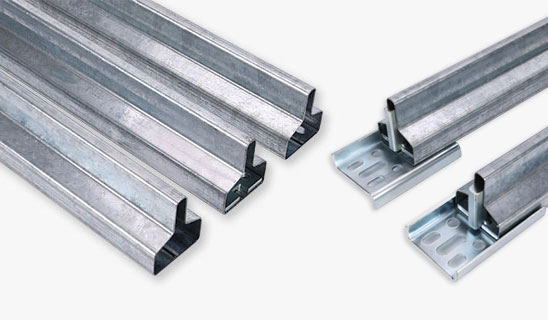
Closed-end hollow guide rails are structural linear motion components designed with an internal cavity and sealed ends. Unlike solid guide rails, which are fully dense, hollow guide rails reduce internal mass while maintaining external rigidity. The “closed-end” structure means both ends of the hollow profile are sealed, preventing dust, debris, coolant, and moisture from entering the internal cavity.
In a typical linear motion system, guide rails serve as the foundation for precise movement. A carriage or linear bearing block moves along the rail, ensuring controlled, low-friction motion. Closed-end hollow guide rails are engineered to provide:
• High dimensional accuracy
• Controlled straightness and parallelism
• Consistent load distribution
• Protection against contamination
Their internal hollow geometry is not simply for weight reduction; it is carefully designed to optimize stress distribution. The outer profile bears most of the bending and shear forces, meaning material can be removed from low-stress regions without compromising structural performance.
This design approach improves mechanical efficiency while maintaining the rigidity required for industrial automation, CNC machinery, and other high-precision equipment.
One of the most significant advantages of closed-end hollow guide rails is their excellent strength-to-weight ratio. In mechanical engineering, bending stiffness is primarily determined by the material’s distribution relative to the neutral axis—not by total mass. By concentrating material in the outer walls of the rail, manufacturers maximize resistance to bending and torsion.
Key factors that contribute to their strength include:
The hollow structure increases the second moment of area, improving resistance to deflection under load.
Closed-end hollow guide rails are commonly manufactured from alloy steel, stainless steel, or hardened carbon steel. Heat treatment processes enhance surface hardness and fatigue resistance.
Grinding and finishing processes ensure tight tolerances and low surface roughness, reducing friction and wear in linear guide applications.
Because weight is reduced without sacrificing rigidity, these rails are ideal for applications where moving mass directly affects system performance. Lower mass contributes to:
• Faster acceleration and deceleration
• Reduced motor load
• Improved energy efficiency
• Lower structural stress on supporting frames
In high-speed automation environments, this combination of lightweight structure and load-bearing capacity delivers measurable performance improvements.
Motion stability is critical in precision manufacturing. Even small vibrations can affect machining accuracy, product consistency, and equipment lifespan.
Closed-end hollow guide rails improve stability through several mechanisms:
The optimized wall thickness and external profile resist deformation under dynamic loads. This reduces deflection during high-speed or heavy-duty operations.
Although hollow structures are lighter, they can be engineered to provide effective vibration control. When paired with linear bearings and proper mounting, the system achieves smoother motion and reduced resonance.
The closed-end design prevents internal contamination, which could otherwise alter weight distribution or lead to corrosion. By protecting internal surfaces, the rail maintains long-term dimensional stability.
In applications such as CNC milling, robotic arms, and automated assembly lines, improved vibration control translates into:
• Higher machining precision
• Better repeatability
• Reduced maintenance frequency
• Extended service life
Stable linear motion systems are especially important in high-speed and high-cycle production environments.
Closed-end hollow guide rails are typically integrated with:
• Linear bearing blocks
• Recirculating ball carriages
• Roller guide systems
• Automated lubrication systems
The rail provides the guiding surface, while the bearing assembly ensures smooth, low-friction travel. Precision alignment during installation is critical. Proper mounting surfaces and parallelism ensure uniform load distribution along the rail length.
Compatibility with modern linear guide systems allows for modular design. Engineers can configure:
• Single-rail or dual-rail setups
• Long-span installations
• High-load multi-carriage arrangements
In automated systems, reduced rail mass also lowers inertia, enabling more responsive servo control. When combined with advanced motion controllers, closed-end hollow guide rails contribute to highly efficient and accurate positioning systems.
Additionally, their sealed ends simplify maintenance by reducing internal corrosion risk and minimizing cleaning requirements.
Because of their balance between strength, precision, and weight reduction, closed-end hollow guide rails are widely used across multiple industries.
Robotic systems, pick-and-place machines, and assembly lines rely on precise linear motion. Lightweight rails improve cycle times and reduce mechanical strain.
Milling machines, lathes, and machining centers require rigid guidance to maintain cutting accuracy. Hollow guide rails help minimize deflection during heavy cutting operations.
Conveyor systems and automated storage solutions benefit from reduced structural weight and high durability.
Imaging systems, laboratory automation devices, and diagnostic equipment demand smooth, vibration-free motion. The closed-end design helps maintain cleanliness and reliability.
In manufacturing plants and large-scale production facilities, hollow guide rails support heavy loads while improving overall system efficiency.